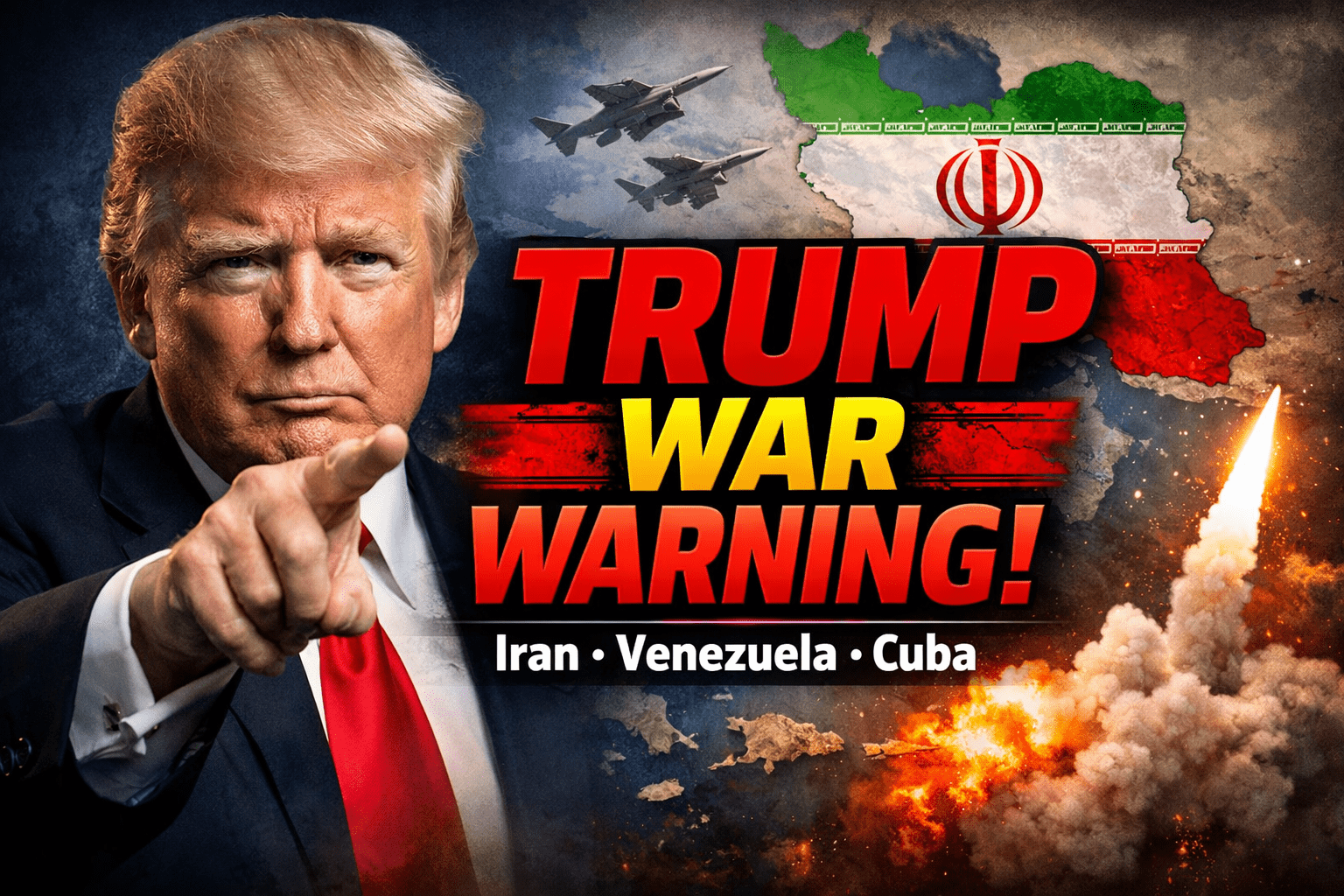
Trump Considers Military and Diplomatic Action Against Iran as U.S. Expands Global Pressure Campaign
Washington, D.C. — Trump Iran threat 2026,President Donald Trump is weighing a series of possible actions against Iran, as nationwide protests intensify inside the country and U.S. officials review military and diplomatic options, according to senior administration source
Speaking amid growing unrest in Iran, President Trump escalated his rhetoric against Tehran’s leadership, signaling support for demonstrators and warning Iranian authorities against using lethal force. In a social media post, Trump said Iran may be “looking at freedom perhaps like never before,” adding that the United States “stands ready to help.”
According to a U.S. official familiar with internal discussions, the president is scheduled to convene a high-level meeting at the White House on Tuesday to discuss a potential response. Major U.S. newspapers report Trump has already been briefed on a range of options, including targeted military strikes, though no final decision has been made.
“I tell the Iranian leaders: you better not start shooting,” Trump said in remarks over the weekend. “Because we’ll start shooting, too.”
Lawmakers Warn of Consequences-Trump Iran threat 2026
Despite the administration’s tough stance, several lawmakers from both parties have cautioned against military escalation. Critics warn that direct U.S. action in Iran could strengthen hardliners, destabilize the region, and lead to unintended consequences.
“U.S. military action in Iran would be a massive mistake,” one lawmaker said. “I don’t know that bombing Iran will have the effect that is intended.”
Iranian officials have dismissed U.S. threats, accusing Washington of interference and warning of retaliation if American forces become involved.
Iran Crisis Follows Venezuela Operation-Trump Iran threat 2026
The Iran deliberations come just one week after the U.S. dramatically expanded its role in Venezuela, following the capture of President Nicolás Maduro in a U.S. operation that stunned the international community.
Maduro was transported to New York, where he now faces drug trafficking charges. He has pleaded not guilty and declared his innocence. Following the operation, President Trump stated that the United States is effectively “running Venezuela” during a transitional period.
The U.S. military has since expanded its presence across the Caribbean Sea, deploying approximately 15,000 troops, naval vessels, and surveillance assets as part of what officials describe as a stabilization and counter-narcotics mission.
Possible Sanctions Relief and Oil Strategy
In a notable shift, a senior U.S. official told reporters that the administration is considering lifting some sanctions on Venezuela as early as next week. The move would allow oil sales to resume under U.S. oversight and is aimed at encouraging American and international energy companies to invest billions of dollars to rebuild Venezuela’s collapsed oil industry.
President Trump has personally urged major oil firms to participate in restoring production, arguing that stabilizing Venezuela’s energy sector would benefit global markets while preventing rival powers from gaining influence in the region.
Cuba Faces Oil and Economic Ultimatum
Alongside Venezuela, the administration has intensified pressure on Cuba, with Trump issuing a stark warning that there will be “no more oil or money” flowing to Havana unless the country reaches an agreement with Washington.
“Make a deal before it’s too late,” Trump said, signaling a willingness to further isolate Cuba economically following the collapse of its primary energy support from Venezuela.
Cuban officials have responded defiantly, rejecting U.S. demands and insisting the country will defend its sovereignty.
Broader Warnings: Mexico, Colombia and Greenland
President Trump has also signaled potential action involving Mexico, Colombia, and Greenland, expanding what some analysts describe as a wide-ranging pressure campaign.
-
Mexico and Colombia have been warned over drug trafficking and security concerns, with Trump suggesting stronger U.S. involvement if cooperation does not improve.
-
Greenland, long viewed by Trump as strategically vital, was again referenced as critical to U.S. national security, reviving tensions with European allies.
Republican Concerns Grow
Even among Republicans, concerns are mounting over the scope of U.S. involvement abroad. Some lawmakers argue that rapid, multi-front pressure risks drawing the country into conflicts without sufficient congressional debate.
“This is about Venezuela, it’s about Greenland, it’s about Colombia, it’s about Cuba,” one Republican senator warned. “It’s about whether people get a say — and whether we go to war.”
A Defining Moment for U.S. Foreign Policy
With tensions rising in the Middle East, Latin America, and beyond, President Trump’s latest moves represent one of the most aggressive phases of U.S. foreign policy in recent years. Supporters argue the approach restores American strength and deterrence, while critics warn it could reshape global alliances and trigger instability.
As the White House prepares for key meetings in the coming days, the world is watching closely to see whether Trump’s words translate into decisive action — or mark the beginning of a broader diplomatic recalibration.
For continued coverage, stay with America360news.com