Trump’s Greenland Push Sparks Diplomatic Storm Between the U.S. and Europe
Former President Donald Trump’s renewed rhetoric around Greenland’s strategic importance has reignited debate across Europe and the United States, triggering diplomatic unease and a wave of reactions from European leaders.
What began as online posts, commentary, and provocative imagery circulating on social media has quickly turned into a broader geopolitical conversation about U.S. influence in the Arctic, NATO unity, and Europe’s response to American pressure tactics.
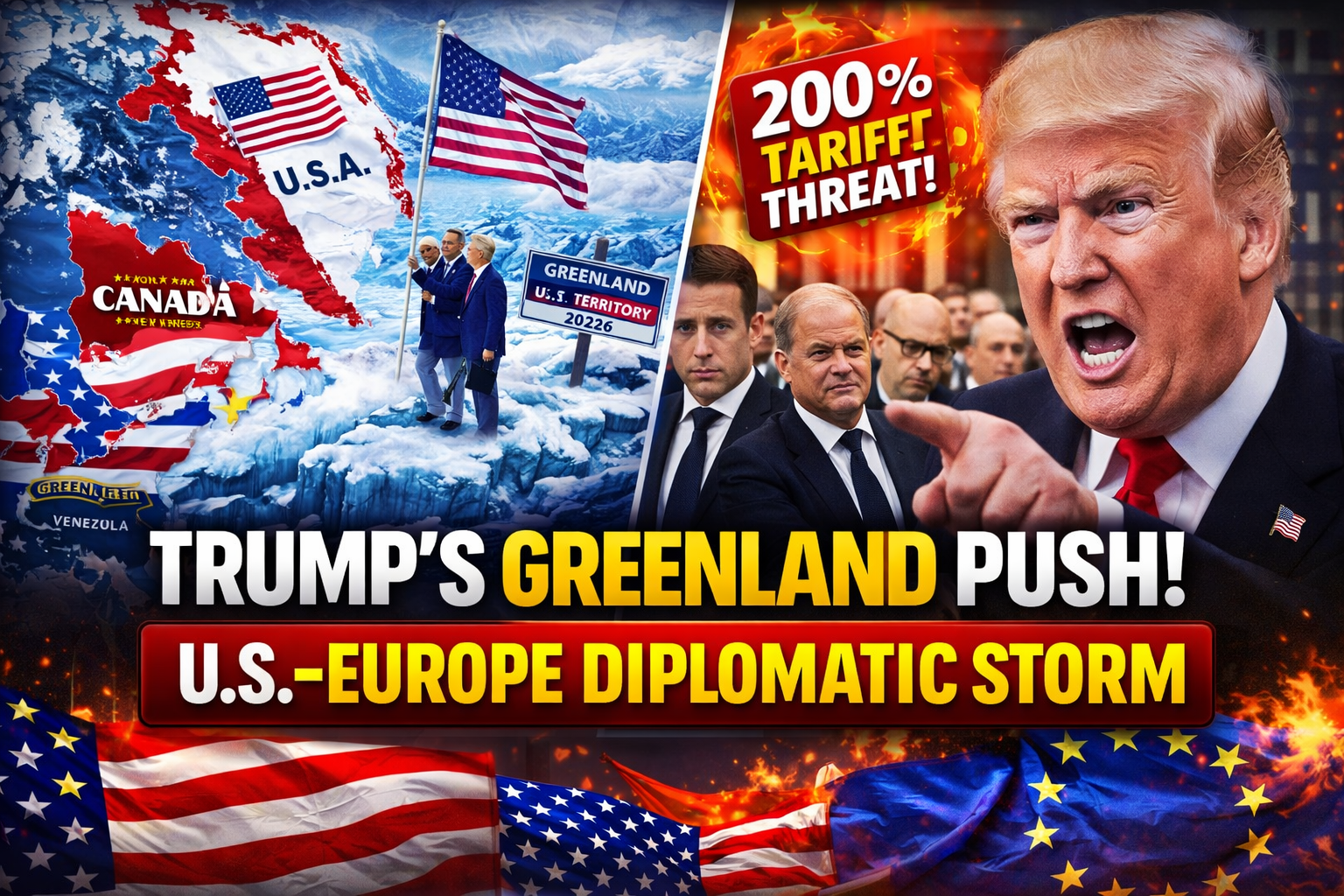
While some of the viral images and claims circulating online appear to be AI-generated or digitally edited, the political messaging behind them has drawn serious attention in diplomatic circles.
Why Greenland Has Become the Center of a New Transatlantic Tension
Greenland, an autonomous territory of Denmark, holds enormous strategic value because of: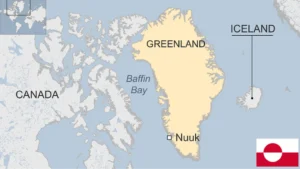
- Its location between North America and Europe
- Expanding Arctic shipping routes due to climate change
- Rich reserves of rare earth minerals and natural resources
- Its proximity to Russia and the Arctic military zone
The United States already operates Thule Air Base in Greenland, making it a critical site for missile defense and Arctic surveillance.
Trump’s past interest in purchasing Greenland during his presidency was widely reported in 2019. The renewed discussion has revived memories of that episode and raised fresh concerns in European capitals.
ON Greenland Social Media Posts and Diplomatic Ripples
Recent viral posts allegedly linked to Trump’s circle have included:
- Edited maps showing Greenland, Canada, and parts of South America as U.S. territory
- AI-generated imagery of American flags raised over Greenland
- Screenshots of private messages with European leaders shared publicly
While authenticity of some content remains unverified, European officials have reacted to the tone and symbolism, viewing it as disrespectful to European sovereignty.
French President Emmanuel Macron and other EU leaders have reportedly emphasized that Denmark is not alone and that the European Union stands united on territorial integrity.
Tariff Threats, Viral Posts, and NATO Concerns Add Fuel to the Growing Rift
Adding to tensions are renewed tariff threats targeting French wine, champagne, and European exports, with figures as high as 200% tariffs mentioned in political rhetoric.
Trade experts warn that such moves—if implemented—could escalate into a serious transatlantic trade dispute, at a time when NATO unity is already under scrutiny due to the Ukraine war and Arctic security concerns.
NATO, Arctic Security, and Strategic Anxiety
The controversy has also revived questions about NATO’s internal cohesion. Denmark is a NATO member, and Greenland falls under its security umbrella. Any aggressive posture regarding Greenland is therefore seen through a NATO lens.
European leaders worry that public pressure tactics could weaken alliance trust at a time when:
- Russia is expanding Arctic activity
- China is investing heavily in Arctic infrastructure
- Shipping lanes are opening due to melting ice
The “Board of Peace” Proposal and Global Invitations
Another development drawing attention is a reported proposal for a new international initiative referred to in political discussions as a “Board of Peace,” with invitations allegedly extended to countries including India, Pakistan, Turkey, Morocco, Canada, Egypt, and others.
While details remain unclear and no formal international framework has been announced, analysts say the concept appears aimed at reshaping diplomatic alignments outside traditional UN and NATO structures.
India, in particular, is said to be approaching the idea cautiously, weighing strategic implications before making any commitment.
Could Russia and China Benefit?
Geopolitical analysts note that any visible rift between the U.S. and Europe could be advantageous for Russia and China, both of whom have been seeking to expand influence in the Arctic and Global South.
A divided West may complicate coordinated responses to:
- Arctic militarization
- Ukraine conflict diplomacy
- Global trade alignment
- Emerging multipolar alliances
Is the U.S.–Europe Friendship at Risk?
For decades, the U.S. and Europe have shared close military, economic, and diplomatic ties. However, aggressive rhetoric, tariff threats, and symbolic provocations risk creating public mistrust even if formal alliances remain intact.
European officials have emphasized de-escalation, with leaders calling for dialogue rather than confrontation.
What Happens Next?
With the World Economic Forum in Davos and multiple international summits ahead, diplomatic observers expect Greenland and Arctic security to become part of broader conversations about:
- NATO’s future
- Arctic governance
- Trade tensions
- Global power realignment
Whether this episode becomes a temporary media storm or a lasting diplomatic issue will depend on how both sides choose to handle the rhetoric in the weeks ahead.
Greenland has once again become more than a remote Arctic island—it is now a symbol of strategic competition, alliance stress, and the changing nature of global power politics.
As Europe signals unity and the U.S. political discourse sharpens, the world is watching closely to see whether diplomacy or disruption defines the next chapter of transatlantic relations.
for more news