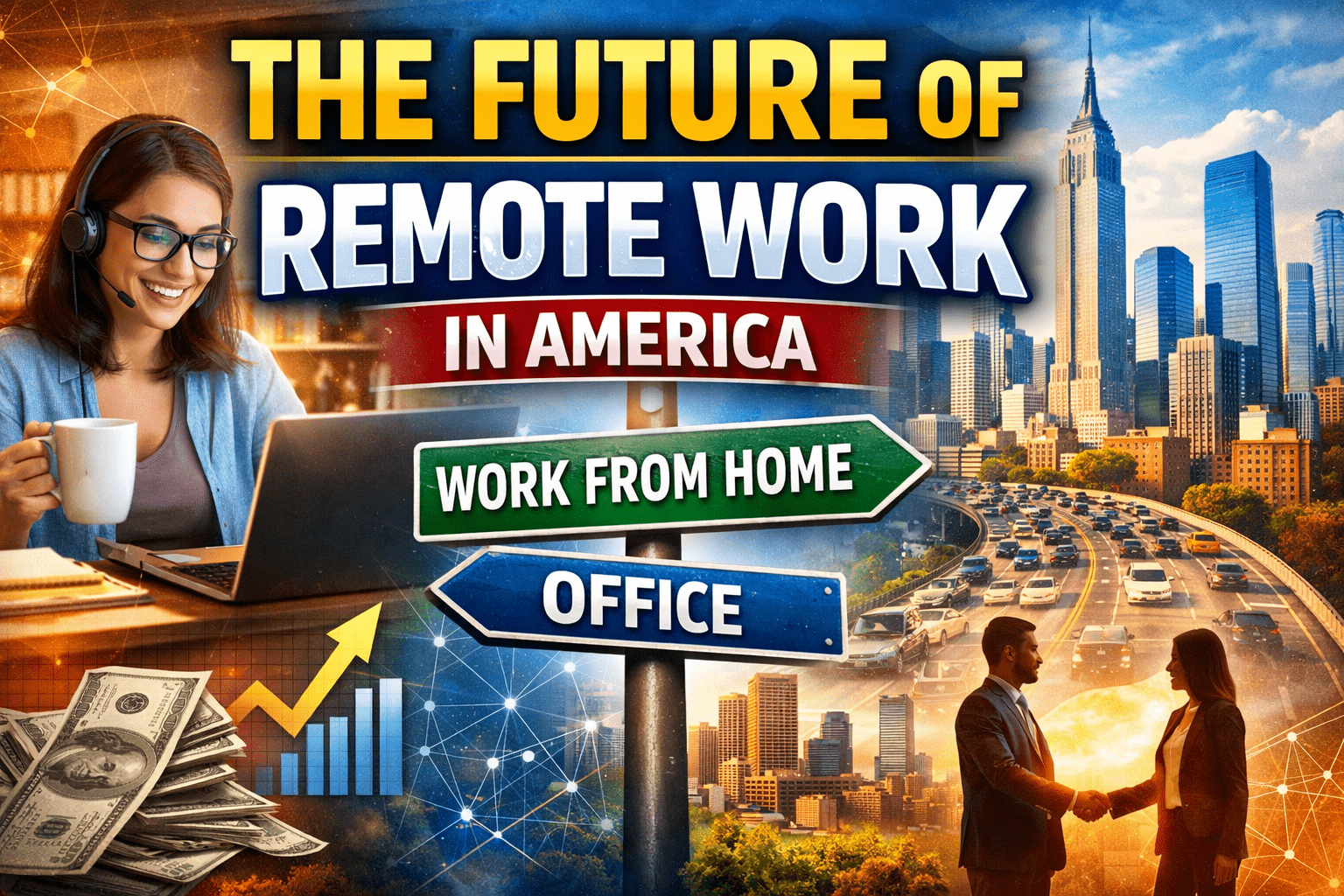
The Future of Remote Work in America: How It’s Reshaping Jobs, Cities, and the U.S. Economy
Explore the future of remote work in America, hybrid job trends, and how work-from-home is reshaping the U.S. economy in 2026 and beyond.Remote work is no longer a temporary trend. It is a permanent shift in how America works.
What started as an emergency response during the pandemic has evolved into a long-term transformation of the American workforce. From Silicon Valley tech firms to small-town startups in the Midwest, remote and hybrid work models are redefining productivity, work-life balance, hiring practices, and even real estate markets across the United States.
But what does this shift really mean for American workers, businesses, and the broader U.S. economy?
Let’s take a deep dive into the
Future of Remote Work in America— and why it matters more than ever.
Future of Remote Work in America-A New Normal
Before 2020, remote work was considered a perk. Today, it’s an expectation.
Millions of Americans now work fully remote or in hybrid arrangements. Many companies have discovered that employees can remain productive outside traditional office spaces. In fact, some organizations report higher efficiency, lower overhead costs, and improved employee satisfaction.
For workers, remote jobs offer:
- Flexible schedules
- Reduced commuting costs
- Better work-life balance
- Access to jobs beyond their local area
- Increased autonomy
For employers, benefits include:
- Reduced office expenses
- Access to nationwide talent
- Lower turnover rates
- Increased employee satisfaction
Remote work is no longer just a convenience. It’s a competitive advantage.
How Remote Work Is Reshaping the American Job Market
One of the most significant impacts of remote work is the expansion of the hiring pool.
Companies in New York can now hire developers from Texas. Marketing agencies in California can recruit talent from Florida. Geographic barriers are fading.
This shift is creating new opportunities for:
- Rural workers
- Parents balancing childcare
- Individuals with disabilities
- Military spouses
- Professionals seeking career flexibility
At the same time, competition has increased. Workers are no longer just competing locally — they’re competing nationally.
This makes skills, experience, and digital literacy more important than ever.
Future of Remote Work in America-The Rise of Hybrid Work Models
While some companies operate fully remote, many American businesses are adopting hybrid work models.
Hybrid work combines in-office and remote days, offering flexibility while maintaining collaboration.
Why hybrid?
Because businesses recognize that:
- Face-to-face interaction strengthens team culture
- Brainstorming sessions can be more effective in person
- Certain roles benefit from on-site collaboration
The future of work in America likely isn’t 100% remote — it’s flexible.
Flexibility has become the new currency of employment.
Remote Work and the U.S. Economy
Remote work is influencing more than just office culture. It’s reshaping entire economic sectors.
1. Commercial Real Estate
Office vacancy rates in major U.S. cities have risen as companies downsize physical spaces. Some corporations are reducing long-term leases or redesigning offices for collaboration rather than daily use.
This shift is forcing cities to rethink downtown development strategies.
2. Residential Real Estate
As remote work allows employees to live anywhere, many Americans are moving away from high-cost metropolitan areas.
States with lower taxes and affordable housing are seeing increased migration. Suburban and smaller city housing markets have experienced growth due to remote flexibility.
3. Local Economies
If fewer workers commute daily, local restaurants, transit systems, and downtown retail businesses feel the impact.
However, suburban communities may benefit as spending shifts closer to home.
Remote work redistributes economic activity rather than eliminating it.
Future of Remote Work in America-Productivity: Are Remote Workers More Efficient?
One of the most debated topics in corporate America is productivity.
Research and corporate surveys suggest mixed but generally positive results. Many remote employees report:
- Fewer office distractions
- Greater focus time
- Higher job satisfaction
However, remote work also presents challenges:
- Communication gaps
- Isolation
- Difficulty separating work from personal life
- “Always on” digital burnout
Successful remote teams rely on:
- Clear communication
- Defined expectations
- Regular virtual check-ins
- Strong leadership
Technology plays a critical role in making remote work sustainable.
Future of Remote Work in America-Technology Powering the Remote Revolution
The future of remote work in America depends heavily on digital infrastructure.
Key technologies include:
- Video conferencing platforms
- Cloud-based collaboration tools
- Project management software
- Cybersecurity systems
- Artificial intelligence tools
High-speed internet access is essential. Rural broadband expansion remains a major priority to ensure equal access to remote job opportunities.
Without reliable internet, remote work opportunities remain limited for some communities.
Bridging the digital divide is crucial for inclusive economic growth.
Remote Work and Employee Well-Being
One of the strongest arguments for remote work is improved work-life balance.
Eliminating long commutes saves time and reduces stress. Parents gain flexibility. Employees can better manage personal responsibilities.
But remote work is not automatically healthier.
Some workers report:
- Longer working hours
- Difficulty disconnecting
- Increased screen fatigue
- Social isolation
Companies that prioritize mental health, flexible scheduling, and digital boundaries are more likely to retain remote employees.
Work culture matters — even when employees work from home.
The Impact on Company Culture
Building company culture remotely requires intention.
Without casual hallway conversations or in-person events, businesses must find new ways to foster connection.
Strategies include:
- Virtual team-building events
- Annual in-person retreats
- Transparent communication
- Clear mission alignment
Culture is no longer built around physical office space — it’s built around shared values and communication.
The companies that adapt culturally will thrive.
Future of Remote Work in Americ-Legal and Tax Considerations in Remote Work
Remote work across state lines introduces complex legal and tax implications.
Employers must consider:
- State labor laws
- Payroll taxes
- Compliance regulations
- Workers’ compensation policies
For employees, relocating to another state can impact:
- Income tax obligations
- Healthcare coverage
- Employment benefits
As remote work becomes permanent, regulatory frameworks may continue evolving.
Future of Remote Work in America-The Future of Office Spaces in America
The traditional 9-to-5 office model is unlikely to disappear entirely.
Instead, offices may transform into:
- Collaboration hubs
- Innovation centers
- Training spaces
- Social gathering points
Companies are rethinking office design to prioritize flexibility rather than rows of desks.
The future office may look more like a co-working space than a corporate cubicle layout.
Future of Remote Work in America-Skills That Matter in a Remote Economy
As remote work expands, certain skills are becoming increasingly valuable:
- Self-discipline
- Time management
- Digital communication
- Technical literacy
- Adaptability
Employers are prioritizing results over physical presence.
Performance is measured by output, not hours spent at a desk.
This shift may benefit highly motivated professionals who value autonomy.
Future of Remote Work in America-Will Remote Work Last?
Most experts agree: remote work is here to stay.
While some companies are encouraging employees to return to offices, the broader trend points toward long-term flexibility.
Employees have experienced the benefits of remote work. Many are unwilling to give it up completely.
In competitive industries, offering remote or hybrid options has become essential for attracting top talent.
Remote work is no longer an experiment.
It’s a structural transformation of the American workforce.
Final Thoughts: A Defining Shift in American Work Culture
Remote work represents one of the most significant changes in U.S. employment history.
It is reshaping:
- Hiring practices
- Real estate markets
- Urban development
- Workforce expectations
- Company culture
- Economic distribution
Like any major transformation, it brings both opportunities and challenges.
For workers, remote work offers freedom — but requires discipline.
For employers, it reduces costs — but demands stronger communication systems.
For cities, it changes economic patterns — but opens new possibilities.
The American workplace is evolving.
The question is not whether remote work will continue.
The real question is how businesses, employees, and policymakers adapt to this new era.
The future of work in America will be defined not by location — but by flexibility, innovation, and resilience.
Future of Remote Work/job in America-stay on – America360news.com
cost of living USA | Why Americans Feel Financial Pressure in 2026 | Rising Living Costs Explained