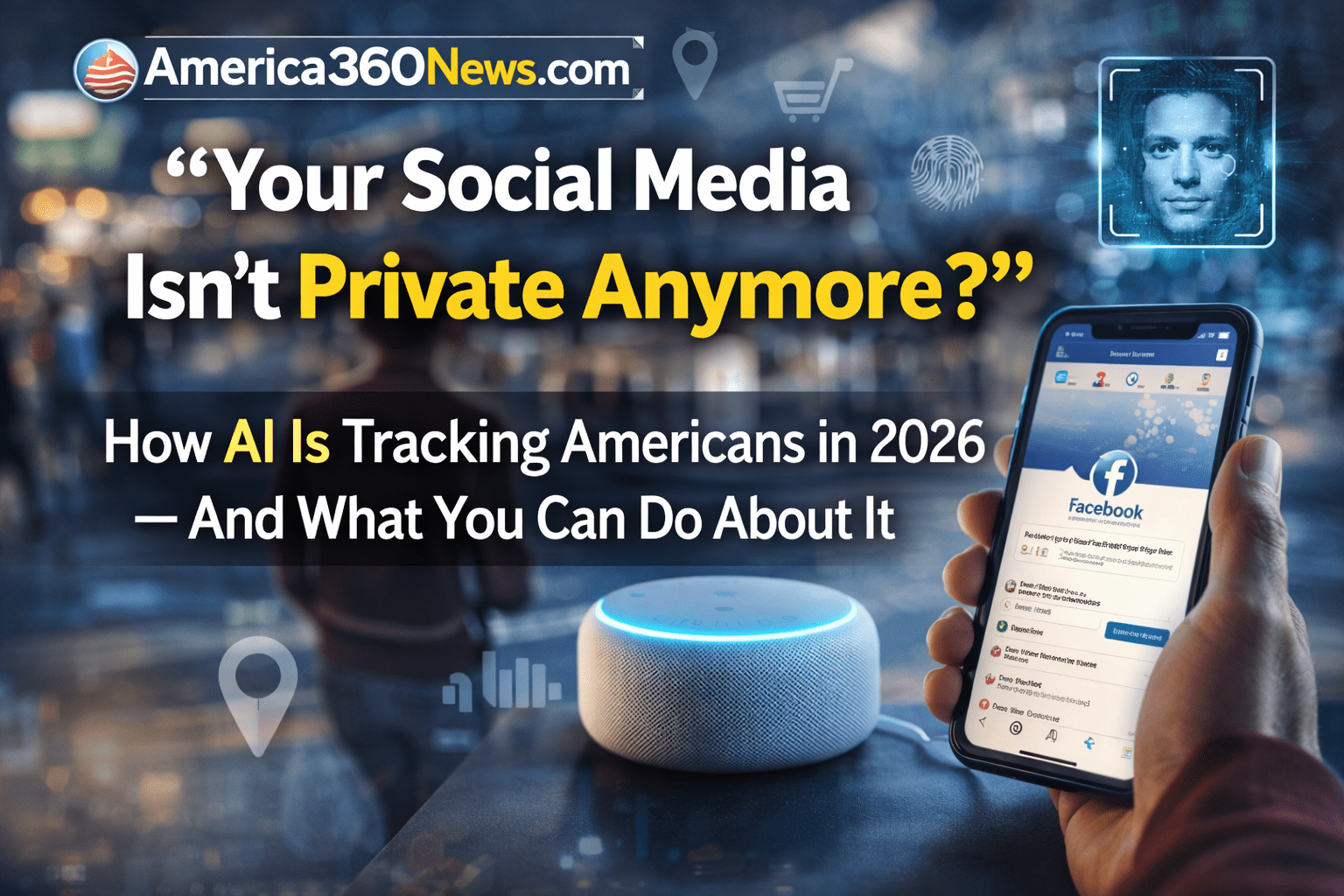
data privacy USA-Your Social Media Isn’t Private Anymore?What You Can Do About It
In 2026, artificial intelligence is everywhere data privacy USA. It helps recommend what you watch, what you buy, where you travel — and even who you connect with. But here’s the uncomfortable truth: AI may also be tracking more about you than you realize.
From personalized ads to predictive behavior analysis, millions of Americans are unknowingly sharing massive amounts of data every single day. The question isn’t whether your data is being collected — it’s how it’s being used.
If you use social media, online banking, smart devices, or even a fitness tracker, this story matters to you.
data privacy USA -Why AI Tracking Is Expanding in 2026
Artificial intelligence systems are now capable of:
-
Predicting shopping behavior
-
Analyzing facial recognition data
-
Tracking browsing habits across devices
-
Monitoring voice commands via smart assistants
-
Mapping location patterns in real time
Tech companies say this improves user experience. Privacy advocates argue it raises serious concerns.
What Data Is Being Collected?
Many Americans don’t realize how much information is shared automatically. Here’s what AI systems often collect:
✔ Location history
✔ Search queries
✔ Purchase behavior
✔ Device usage patterns
✔ Voice recordings (via smart assistants)
✔ Social media engagement
Even “anonymous” data can often be re-identified when combined with AI analytics.
Is This Legal in the United States?
Data privacy laws in the U.S. are evolving. States like California have implemented stronger privacy regulations, but federal AI legislation is still developing.
Key debates in 2026 include:
-
Should AI companies disclose full tracking methods?
-
Who owns user data?
-
Can consumers opt out completely?
Privacy remains a hot topic in Congress and among tech leaders.
7 Ways to Protect Your Digital Privacy Today
You don’t have to be a tech expert to protect yourself. Start here:
-
Review app permissions on your phone
-
Turn off location tracking when not needed
-
Use two-factor authentication
-
Limit voice assistant data storage
-
Adjust social media privacy settings
-
Use secure browsers and private search engines
-
Regularly delete unused apps
Small steps can significantly reduce your digital footprint.
The Smart Device Dilemma
Smart homes, wearable devices, and connected cars are making life easier — but they also create more data streams.
The more connected your home becomes, the more information flows through AI systems. Convenience and privacy are now deeply connected.
data privacy USA ,Why This Story Matters Now
AI isn’t slowing down — it’s accelerating. In 2026, businesses rely on predictive algorithms more than ever. Consumers are starting to ask harder questions about transparency and control.
Understanding how AI tracking works isn’t about fear — it’s about awareness and smart digital habits.
FAQs’ – data privacy USA
Q1: Is AI really tracking everything I do online?
Not everything — but browsing, shopping, and location data are commonly collected.
Q2: Can I completely stop AI tracking?
It’s difficult to eliminate entirely, but you can reduce exposure significantly.
Q3: Are smart home devices listening all the time?
They typically activate after wake words, but some data may still be stored.
Q4: Is AI tracking dangerous?
It depends on how the data is used and protected.
Q5: What’s the safest way to browse in 2026?
Use privacy-focused browsers, limit permissions, and enable security settings.
for more next news article – america360news.com
Artificial Intelligence Is Reshaping American Jobs Faster Than Policymakers Can Respond
AI tracking 2026
data privacy USA
AI surveillance America
how to protect online privacy
social media privacy tips
smart device data tracking
digital privacy laws US ,AI privacy news, America tech update, data protection 2026, US technology trends, digital surveillance USA, cybersecurity awareness, AI regulation debate, consumer privacy rights, America360News tech, online privacy protection, smart home privacy, AI and data security, breaking US tech news, future of AI America, tech policy 2026